Mastermind strategy: how to crack the code in fewer guesses
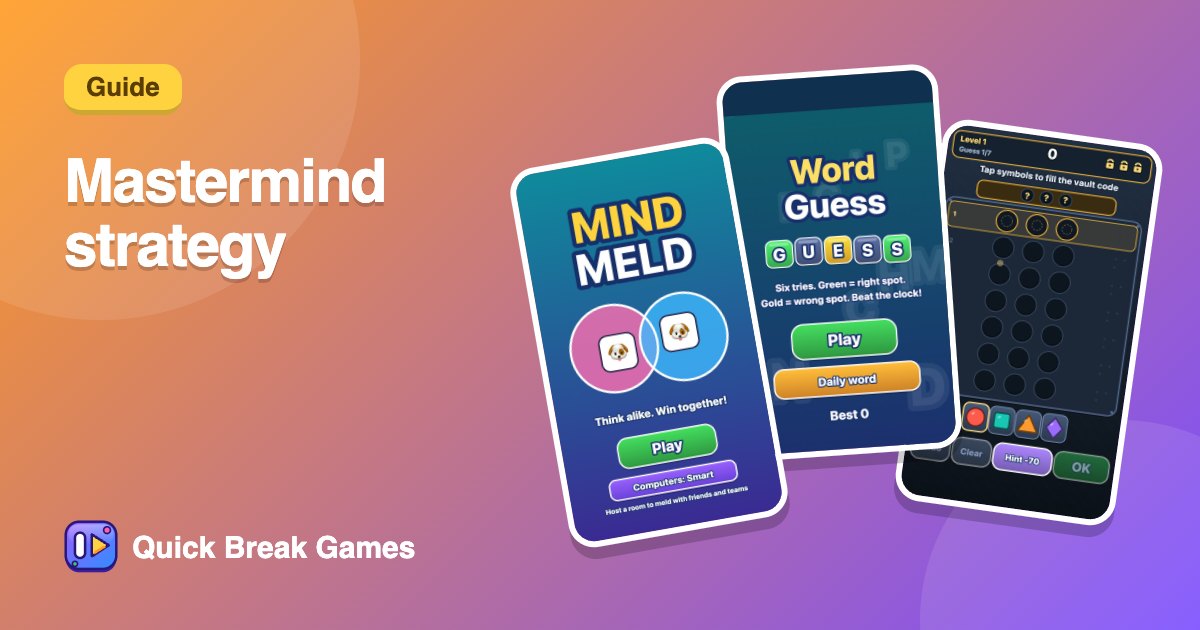
Mastermind style games feel like guessing, but a few habits turn them into logic. This guide uses the clue system from Code Cracker: a gold peg means the right symbol in the right place, and a ring means the right symbol in the wrong place. The same ideas work in other code-breaking games.
1. Use the first guess to learn, not to win
Do not repeat one symbol on the first row. Try different symbols so the pegs tell you which ones are in the code at all. If the first row gets no pegs, you have just ruled out all of those symbols, which is very useful.
2. Treat gold pegs and rings differently
- Gold peg: one of your symbols is correct and in the right slot. Keep it in mind, but you may not know which one yet.
- Ring: a symbol is in the code but you put it in the wrong slot. Move it next time.
3. Only make guesses that could be right
After each row, ask: "If my next guess were the real code, would it agree with every clue so far?" If not, change it. Guesses that fit all earlier clues shrink the possibilities fast, and one of them might simply be correct.
4. Change one thing at a time when you are stuck
Swap a single symbol and see how the pegs change. If a gold peg disappears, the symbol you removed was correct in that slot.
5. Watch for twists
Later levels add repeated symbols, locked slots that are already solved, and a decoy symbol that is never in the code. The banner tells you when a new twist appears. Locked slots are free information, so build around them.
6. Use hints sparingly
A hint solves one slot but costs reward points. Try one more logical guess first.
Practise with the daily vault in Code Cracker, or try a similar clue idea with letters in Word Guess. More brain games: brain games online.