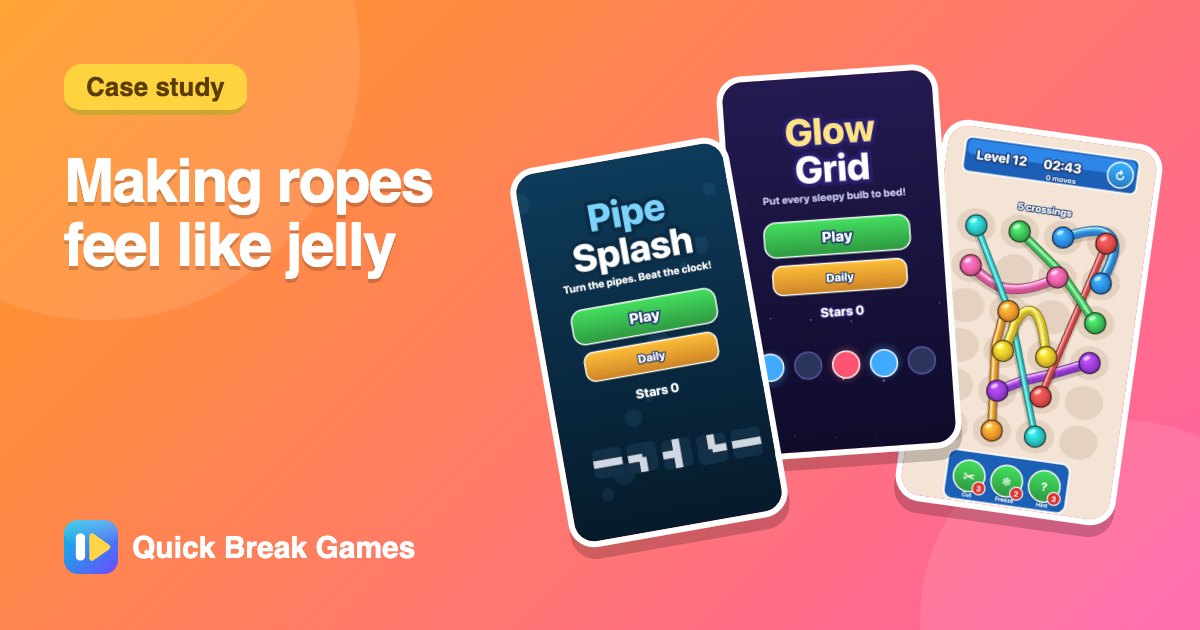
Case study: how we made the ropes in Twisted Ropes feel like jelly
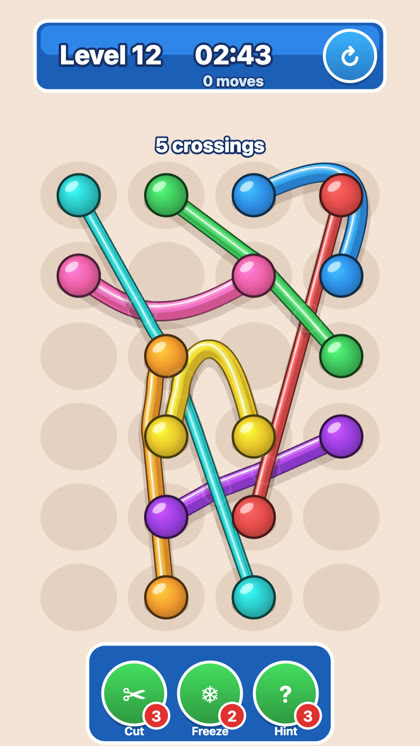
Twisted Ropes looks simple: drag the pegs until no rope crosses another. Making it feel good took three rebuilds. This is how it went, and what we would do again.
Version 1: straight lines
The first version drew each rope as a straight line between two pegs. The rule was easy to build and easy to check: two lines cross, or they do not. It worked, but it felt like a geometry exercise. Nothing about it made you want to pull a rope.
Version 2: curves and over and under
We asked a better question: what would make people want to untangle things? Two answers came out. First, ropes that bend into soft curves. Second, ropes that pass over and under each other, so a crossing is something you can see and remove. We also added three helpers: Cut removes a rope, Freeze locks one in place, and Hint points at a useful move.
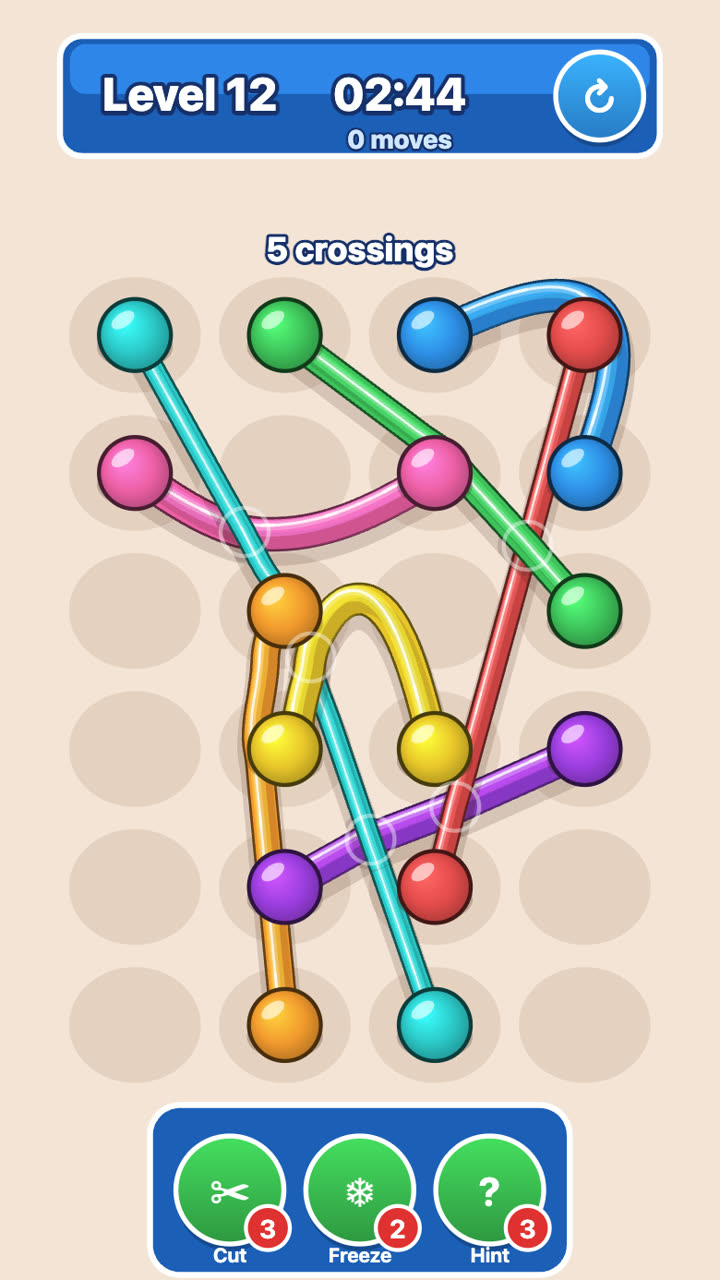
Version 3: a rope that behaves like a rope
The third version made each rope a chain of about twenty connected points. Each point is pulled towards its neighbours, like a string of beads on springs, so the rope swings and settles when you let go of a peg. We then spent most of the time on feel: how stretchy the rope is, how quickly it stops wobbling, and how much the pegs bounce when you pick one up. The aim was a rope that feels soft and slightly silky, not stiff and not floppy.
Small touches matter here: a rim shade and a soft shine on each rope so it looks round, a little jiggle when you pick up or drop a peg, and ropes that gently push apart when they are not tangled.
Making sure every level can be solved
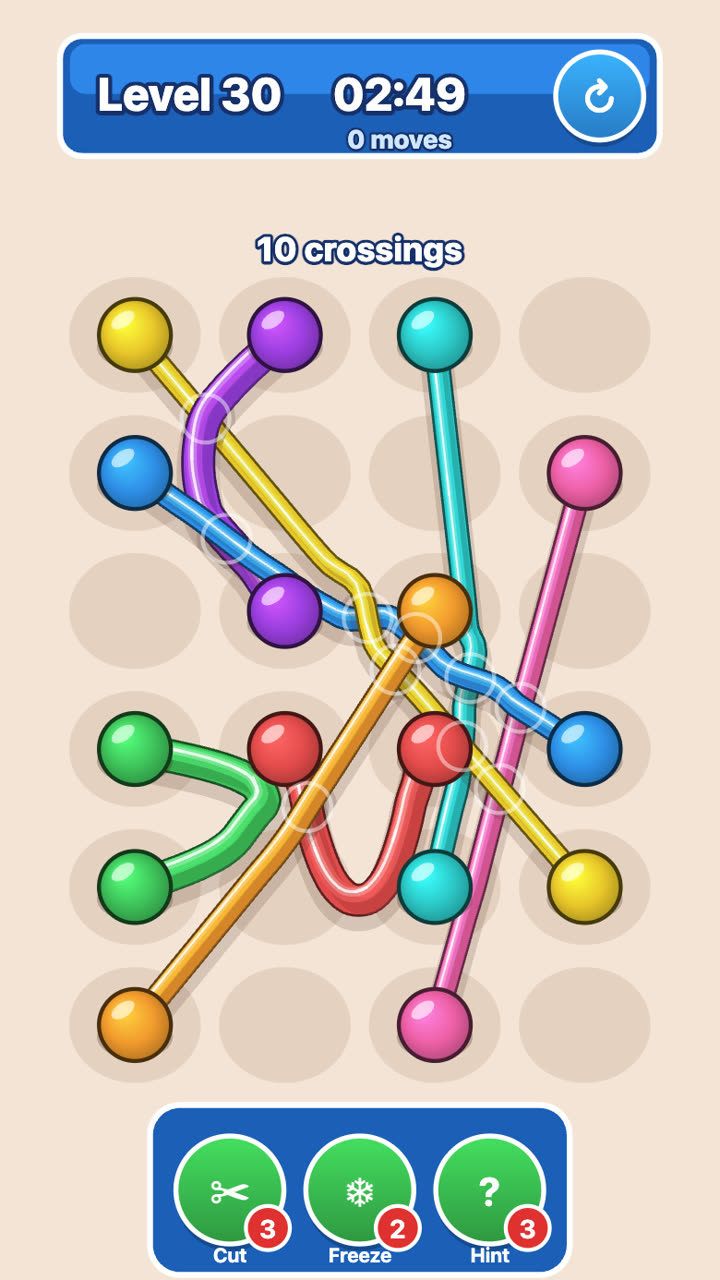
Nothing spoils a puzzle like a level that cannot be finished. So the levels are made by code, and every one of the 40 was checked by an automatic player that has to find a way to solve it. We also check that the ropes stay stable and never end up in a state that has no way out.
What we learned
- Feel beats features. The biggest jump in how good the game felt came from soft physics, not from a new rule.
- Test with a robot. An automatic solver caught impossible levels long before a person would have.
- Change a few numbers at a time. Softness, damping and bounce are all linked. Changing one without the others hides what each does.
- Start simple, but do not stop there. Version 1 was needed to prove the rule. It was never going to be the game.
Want to try it? Play Twisted Ropes, or see more in online puzzle games.